ESL Advanced / High (Period 8 GOLD) Assignments
- Instructors
- Term
- Fall 2017
- Description
-
FOR ALL ESL HOUSEHOLDS:ESL is a course for students who are learning English as a second language. Our classes include students from all over the world. Our goal is to help our students be proficient in English while maintaining their first language too.1. Please click on the attachment below and have at least one adult from your household view.2. Please click on the link https://docs.google.com/forms/d/1Xo_VlzPAGqJ9LO-DiHzpy8Fmizf6gieLTkd6-DC5Kl0/edit and have at least one household adult/guardian complete the Google form by Tuesday, September 5, 2017. Once completed, your family will be checked as having received the class syllabus.FOR ALL ESL STUDENTS, AUG 28 & AUG 29:Today, we will be sharing a few things about one another. Please click on the link and complete the Google form. Thank you! So excited!
Upcoming Assignments

No upcoming assignments.
Past Assignments
Due:
Assignment
Due:
Assignment
Due:
Assignment
Due:
Assignment
Due:
Assignment
Due:
Assignment
Due:
Assignment
Due:
Assignment
Due:
Assignment
Due:
Assignment
Due:
Assignment
Due:
Assignment
Due:
Assignment
Due:
Assignment
Due:
Assignment
Due:
Assignment
Due:
Assignment
Due:
Assignment
Due:
Assignment
Hispanic Heritage Month starts on September 15. Hispanic students gathered to talk about it. They go to school in East San Jose, California.
“Do you know what Hispanic Heritage Month is?” the students were asked.
“No,” they said.
Hispanic Heritage Month is to meant to celebrate Hispanic Americans. September 15 is the independence day of several Spanish-speaking countries. They are Costa Rica, El Salvador, Guatemala, Honduras and Nicaragua. On September 16 Mexico celebrates its independence. On September 18 Chile celebrates its independence.
Michelle Ortega is a sophomore. She said that Hispanic Heritage Month sounded like something for people whose parents are from Latin America. She thought it was not for her.
What Is Hispanic Culture?
Hispanics are similar in some ways. They are different in other ways. They come from 20 different Spanish-speaking countries. Some are born in the United States and learn Spanish as their first language. Some learn English and Spanish at the same time.
There is no single history of Hispanics coming to the United States. Each story is different.
Also, each country has its own culture and traditions. Including all of these in Hispanic Heritage Month is hard.
Day of the Dead is an example. Several countries have the holiday. However, each country celebrates it differently.
Zuleyma Ponce is from El Salvador. She says Day of the Dead is not celebrated there like it is in Mexico. It is more sad. It is not as colorful. People visit cemeteries instead of having parties.
Mexico Gets The Most Attention
Many people focus on Mexico during Hispanic Heritage Month. Mexico is nearby. The United States has a history with Mexico that goes back many years. Many Hispanics in the United States come from Mexican families. Not all of them do, though.

The words “Hispanic” and “Latino” can be confusing. "Hispanic" means Spanish-speaking people from Spain and most of Central and South America, except for a few places. Brazil is in South America. In Brazil, Portuguese is spoken, not Spanish.
"Latino" means people from countries in Latin America. Latin America is the countries in Central and South America. Latin America includes Brazil even though Spanish is not spoken there. The word "Latino" refers to people who live in the United States. It does not include everyone in the U.S. who speaks Spanish, though. It does not include people from Spain.
The students do not call themselves Latino or Hispanic.
In fact, the words were not created by Spanish speakers or people from Latin America. Both of the words were created for the U.S. Census. The Census is a count of the population. It takes place every 10 years. In 1976, a law was passed. The law created “Hispanic” and “Latino.” People thought this would make it easier for the census to collect information.
A Language In Common
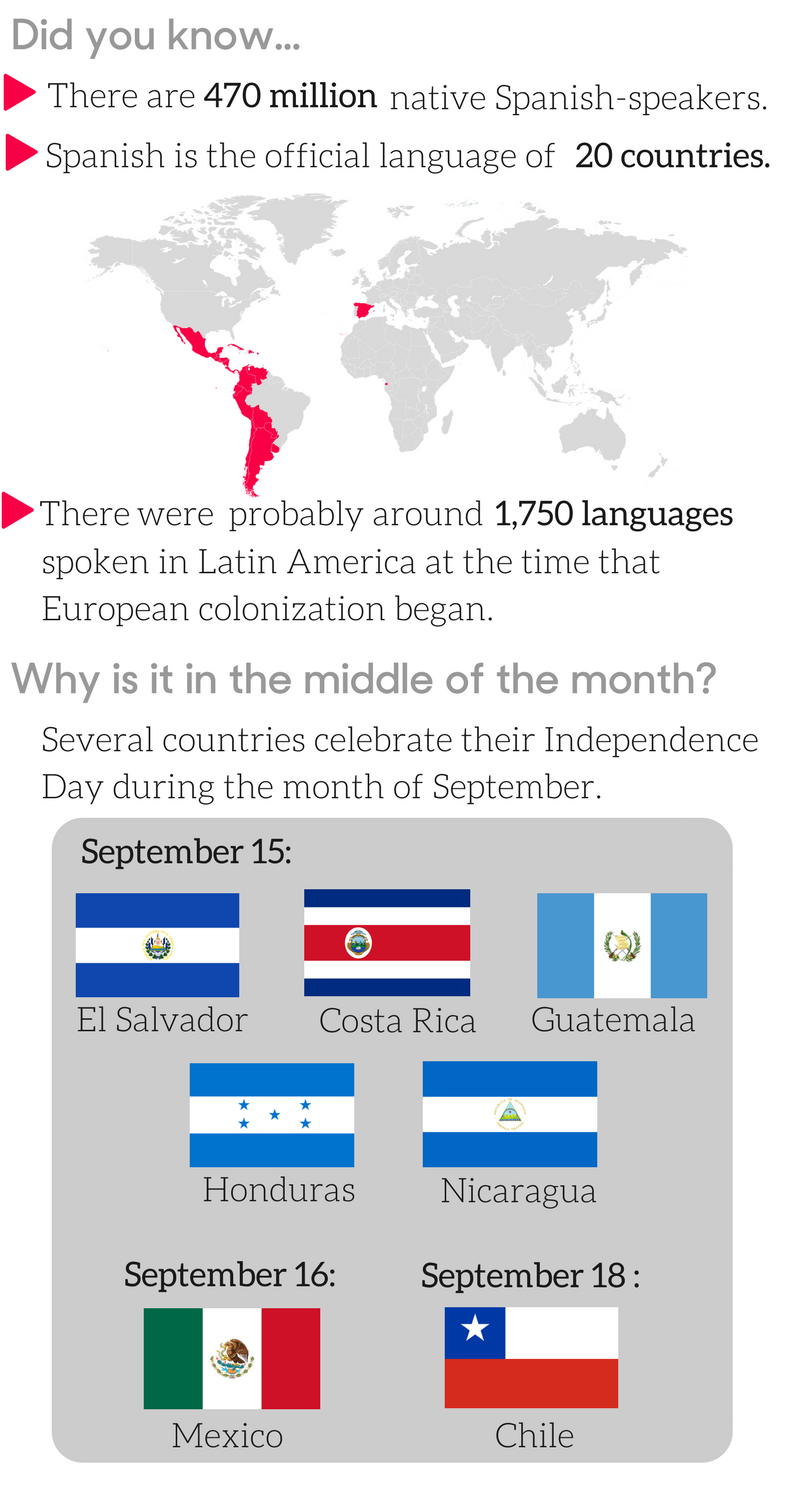
The Spanish language is one thing Hispanics share. Different places speak differently, though.
Cesar Lopez talks about making his journey to the United States. He is from Honduras. He had to stop talking with an accent and use Mexican words while in Mexico. In the U.S., people often think he is Mexican.
Some people think that all Spanish speakers are from Mexico. Zuleyma shares that she is mistaken for being Mexican.
Even in Mexico, Spanish is not the only language. Tenth-grader Abraham Espina is from Mexico. He pointed out that there are indigenous people in Mexico. Many of them do not speak Spanish. Indigenous people lived in Central and South America before Spanish colonizers came.
Language and traditions can be very different. Does anything unite Hispanics and Latinos in the United States?
Michelle believes that Latinos have something in common. They share values like “hard work, education and better opportunities.” These are some of the reasons people come to the United States, she says.
Michelle wants to give back to her community by becoming a lawyer.
Due:
Assignment
Due:
Assignment
Due:
Assignment
Due:
Assignment
Due:
Assignment
- You and a partner will research DACA by reading at least 3 news articles about it.
- Develop your thoughts & your group will be assigned either for or against it.
- Transfer your thoughts to the flip grid topic: https://flipgrid.com/20be8